
Internal Family Systems (IFS) has become one of the most respected approaches for emotional healing, Self-leadership, and inner transformation. Whether someone is working through past wounds or simply trying to feel more grounded, the IFS model offers a gentle way to get to know the different “parts” within us that carry emotions, stories, and protective roles. But as the approach grows in popularity, a lot of people find themselves unsure about something important: the difference between IFS therapy and coaching. The terms sound similar. The work can feel similar. And yet, legally and practically, they’re not the same.
Many people find hesitation in this perplexity. They know they want assistance, but they’re not clear which route best fits their needs right now: more profound healing, emotional clarity, or just a sympathetic friend in their own development.
This blog aims to make that decision easier. We’ll walk through the IFS model, the differences between coaching and therapy, and how to recognize which approach supports you best, depending on your circumstances, history, and goals.
Understanding the IFS Model
Every person in the Internal Family Systems paradigm is a system of inner parts: protectors, managers, firefighters, and wounded younger parts, each trying in its own way to assist us in surviving. Under those factors lies the Self: composed, sympathetic, self-confident, and, by nature, capable of leading with purpose.
IFS work isn’t about forcing change. It’s about helping parts unblend so you can understand them, care for them, and build a more harmonious inner world.
IFS Coaching vs Therapy — What’s the Real Difference?
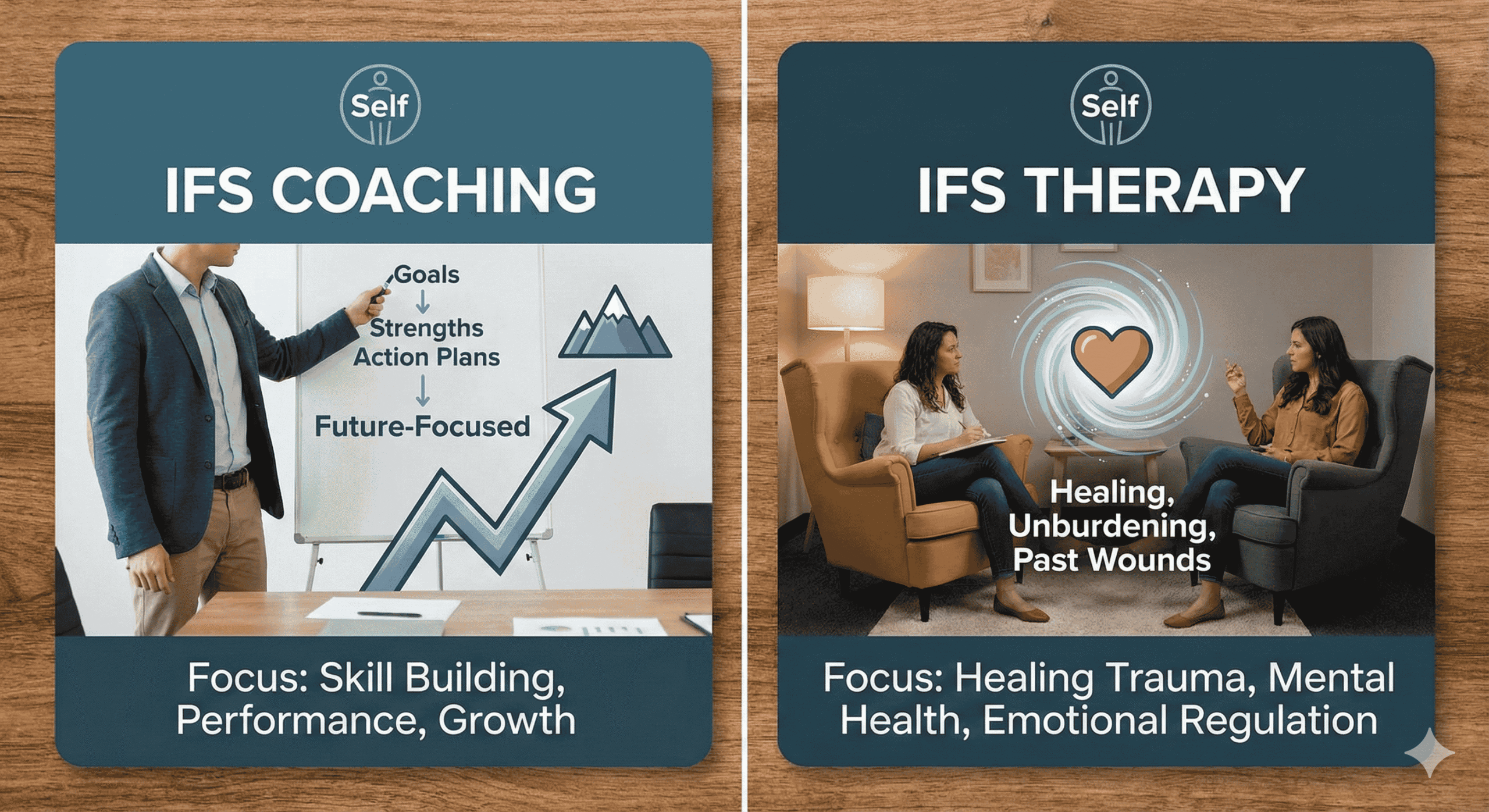
Though they both employ the IFS paradigm, they are not interchangeable. The difference lies in training, scope, depth of healing, and the kind of assistance someone requires at any given time.
Training + Credentials
IFS therapists are licensed mental health professionals, clinicians who are permitted to diagnose, treat trauma, and work with mental health conditions. Their IFS training is an addition to their clinical license.
IFS coaches and practitioners, like DP Nelson, complete formal IFS training and mentorship, but they do not operate as therapists. They specialize in guidance, emotional clarity, and Self-leadership without providing clinical treatment.
Non-medical, development-oriented coaching is aimed at cooperating with someone rather than curing a disease.
Scope of Work (Healing vs Growth vs Skills)
IFS treatment tackles emotional wounds, trauma backgrounds, attachment injuries, and patterns linked with mental health disorders. Therapists sometimes, at a slow, deliberate pace, assist patients to process profound suffering.
Personal development, internal clarity, decision-making, unblending, and reconnecting with Self are at the core of IFS coaching.
It supports people in exploring their inner world without medical intervention. Coaching is compelling for building resilience, leadership, and conscious awareness of parts.
Depth of Trauma Work
Therapists who have been taught to respond clinically should be ready so that, if those memories get overpowering, they may safely lead patients into very charged or traumatic memories.
Although they do not treat trauma, coaches approach trauma-affected areas in a caring, sympathetic manner. A coach assists the client in stopping, resourcing themselves, and considering a referral if a component requires clinical treatment or re-experiencing.
This boundary keeps the work safe and steady.
Boundaries and Ethics
IFS therapy falls under a strict clinical code, documentation, diagnoses when appropriate, and mental-health-related ethics.
IFS coaching uses clear, non-clinical boundaries. No diagnosis. No treatment plans. No claims of curing trauma or conditions. Coaches support lived experience, emotional capacity, and ongoing growth.
This makes the container feel spacious and collaborative.
Somatic and Emotional Regulation
Both coaching and therapy may include gentle awareness of the body, breath, sensations, and emotional cues.
However, therapists can use somatic trauma-processing methods that coaches are not permitted to use.
Coaches help clients strengthen internal awareness, stay connected to Self, and build inner trust, all without crossing clinical lines.
When IFS Coaching Is the Right Fit
Many people are amazed at how transforming IFS coaching may be, even without the clinical element. Coaching is especially beneficial when someone wants more profound emotional clarity and a stronger connection to their inner world, but is not seeking mental health care.
If you are negotiating personal changes, new jobs, major decisions, or uncharted emotional terrain, and desire constant support, you might be well-suited for IFS coaching. Another common scenario is feeling stuck in repeating patterns, the kind you can talk about logically but can’t shift on your own. Coaching helps you unblend from the frustrated part and meet the part that’s afraid or unsure.
It’s also ideal if you’re seeking skills in Self-leadership: more calm, more presence, and more ability to respond rather than react. Some people come to coaching simply because they don’t want something “clinical.” They want a warm partnership with someone who understands parts work and can walk with them as they slowly reconnect with themselves.
IFS coaching can also support people who have already done therapy and want continued growth. It complements prior healing, offering a next step that’s spacious, intuitive, and empowering.
When IFS Therapy Is the Better Choice
Often more suited when someone is suffering from severe trauma memories, persistent emotional anguish, or symptoms associated with mental health disorders, IFS therapy is often more suited. Clinical therapists are equipped to ethically and securely house such experiences.
Therapy offers the controlled, licensed area needed for that level of work if someone is dealing with panic attacks, PTSD symptoms, disordered eating, complicated trauma, or suicidal thoughts. If the nervous system becomes overloaded, a therapist might vary the session’s pace, operate gently with very protective parts, and react clinically.
Still, and this is crucial, trauma in your past does not necessarily mean you need coaching instead of treatment. Coaching helps many trauma survivors as long as their system feels stable, resourced, and not in severe distress. The difference resides in your present requirements, not your background.
How to Decide What You Need
Choosing between IFS coaching and therapy is really about listening to the parts of you that are asking for support. Some parts want growth. Some want stability. Others want healing but don’t want to open doors that feel too heavy.
One easy way to find out is to observe your system’s reaction to each choice. Does therapy feel too clinical or overwhelming, or does it feel appropriately structured? Does coaching strike you as cooperative and helpful, or as it might not be thorough enough for the situation you are going through?
You don’t need to diagnose anything. You don’t need to know the “right” answer. You’re simply paying attention to the needs of your protectors, your younger parts, the exhausted ones, the hopeful ones. Frequently, your body sends you messages. Coaching could be a safer starting point if thinking about treatment makes you feel shut down or tense. If imagining coaching feels too light for what you’re holding, therapy may provide more containment.
And remember: you can change course. These are not permanent decisions.
How DP Nelson Supports Transformational Inner Work
DP Nelson offers IFS coaching in a warm, intuitive, trauma-informed space designed for people who want clarity and emotional grounding without clinical treatment. The approach is gentle but honest, grounded but flexible. Sessions unfold at your pace, always guided by connection to Self rather than pressure to “get somewhere.”
Clients often describe the experience as collaborative, like having someone present with you as you meet your parts in a new way. There is steady attention to safety, pacing, and internal permission. When protectors show up, DP meets them with curiosity instead of resistance. When younger parts appear, the focus shifts toward helping you build trust with them, rather than trying to fix them.
The work is practical, too. You learn how to unblend in daily life, pause before reacting, notice when a protector takes the wheel, and engage your system with compassion. With time, this develops inner leadership and emotional resilience.
The goal of DP’s coaching is not to reach perfection. It’s about gradually and steadily coming home to yourself with assistance.
FAQs
Is IFS coaching the same as therapy?
No. Coaching is non-clinical and focused on growth, while therapy is licensed clinical treatment.
Can I do IFS coaching if I have trauma?
Yes, if your system feels stable. Coaching is safe and supportive, but does not treat trauma.
How do I know if I need therapy instead?
If you’re experiencing acute distress or mental health symptoms, a licensed therapist is more appropriate.
Conclusion
Knowing the contrast between IFS therapy vs coaching helps you choose the path that best fits your system, with the right level of care. While coaching provides a grounded, kind place for development, clarity, and learning to guide your life from the Self, deep clinical healing calls for therapy.
IFS coaching with DP Nelson might be the ideal next step if your components are searching for consistent direction, a warm presence, and a trauma-informed partner in your interior work. You don’t need to carry everything yourself. At a pace that feels secure and encouraging, and in line with what you need right now, you may investigate your inner environment.